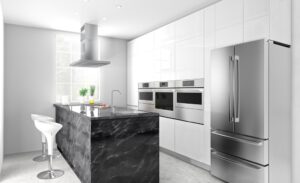

What Is a Speed Oven? Why This Hybrid Appliance Redefines Luxury Kitchen Architecture
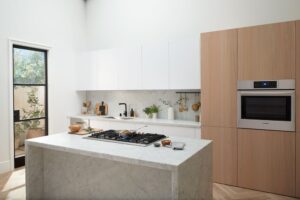
When shopping for luxury kitchen appliances, homeowners often consider a built-in speed oven to expand cooking options beyond what a standard oven, microwave, or wall oven can provide. Including a speed oven in kitchen designs significantly enhances cooking flexibility.
Speed ovens provide a unique kitchen design element by integrating microwave, convection, and broiling technologies all in one built-in unit. A built-in speed oven allows home cooks to prepare crisp and browned meals and side dishes in a shorter amount of time. It is a great option for extra cooking needs and tasks.
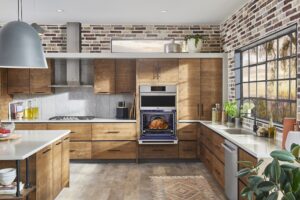
For designers, the appliance streamlines the design process because it can be installed above a standard wall oven, combined with a warming drawer, or set in a tall cabinet bank. Its small size helps eliminate clutter on the countertop, provides ample capacity, and maintains the visual balance expected in luxury kitchens.
The Thermodynamics of Speed Cooking: Breaking Down the Technology
A built-in speed oven integrates convection cooking, radiant broiling, and microwave energy within a single compact unit. Unlike a conventional built-in microwave, it works as a true thermal oven. In fact, it can use each of the three heating methods independently or combine them to cook food faster and more evenly. Let’s discover the thermodynamics of speed cooking and how these systems work together.
Microwave Energy Heats the Interior
The built-in speed oven employs microwave energy to penetrate denser foods, heating their core moisture to the point of boiling. This makes it the perfect built-in solution for reheating, defrosting, and cooking denser foods that would typically require longer heating times with conventional ovens.
Convection Heat Cooks the Exterior
The convection system uses a heating element and fan to move hot air around the cavity and surround food evenly. This method removes surface moisture and helps provide balanced baking, roasting, and browning, along with crisping, across the surfaces of food evenly and consistently.
Radiant Broiling Creates a Crisp Finish
Radiant broiling creates a speedy finish with intense, direct, upper-element heating. It adds the strong surface control found in high-end kitchen appliances and built-in kitchen systems. It also creates a golden crust on cheese, caramelized toppings, and crispy skin on roasted poultry.
Multiple Heating Systems Work Together
In combination mode, the microwave heats the center of the food while convection airflow and radiant heat develop the exterior. Because all three modes work together, the food cooks quickly while preserving moisture, structure, browning, and the crisp texture.
More Than a Convection Microwave Combo
A convection microwave combo usually has a fan and heating element. However, true speed ovens provide more powerful thermal output, which means they reach higher temperatures and offer precise controls with more specialized and advanced features. A speed oven is like a smaller convection oven, but has added controlled microwave cooking energy.
Simultaneous Power: How Inverter Tech Interacts with Convection Fans
Speed cooking is a unique method of cooking that combines controlled microwaves with high-temperature convection heat. Unlike other methods that complete each heating phase in sequence, speed cooking systems employ both methods simultaneously.
Inverter Magnetron Steady Energy
Traditional microwave systems heat food by delivering bursts of microwaves, which result in a food core that is unevenly heated. The inverter magnetron delivers a constant stream of low-intensity microwaves. This even heating reduces a food core’s cold spots and minimizes moisture loss and edge overheating.
European Convection Distributes Intense Heat
A European convection element works with a high-speed fan to evenly distribute and concentrate heat across the cooking cavity. The airflow interacts with the food surface evenly and removes moisture and enhances the exterior, supporting roasting, crisping, browning, and caramelization.
Dual-Action Cooking Improves Speed and Texture
Microwave and convection technologies work together to process the interior and exterior of food, providing the ultimate time-saving cooking technology. Cooking time can be reduced by as much as 50%, depending on the food and user-selected settings.
Smart Sensors Maintain Balanced Performance
During every cooking cycle, built-in sensors monitor the temperature, moisture, food settings, and cooking time. Intelligent control systems balance microwave and convection cooking. As a result, each cycle is able to retain moisture, preserve color on the surface, and maintain an even, oven-baked texture.
Architecture and Layout Integration: Choosing Compact Wall Ovens
For custom builders and designers, speed ovens can be a game-changer. These appliances enable an expansion of your cooking capability without using the cabinet space. Their shorter height makes them easy to fit into appliance columns, base cabinets, and a precisely designed wall.
Creating a Secondary Cooking Station
A speed oven can reheat, bake, broil, and prepare small meals. This versatility enables large jobs to be undertaken by the main oven, while side dishes, appetizers, or foods that require different cooking temperatures can be done by the speed oven.
Stacking Within an Appliance Column
Designers like to stack compact wall ovens above the full-size wall ovens or warming drawers. This vertical arrangement keeps the use of space efficient and creates a perfectly balanced and professionally designed wall with the essential cooking functions.
Reducing Countertop Appliance Clutter
The combination of a speed oven and a built-in microwave means there’s no need for a separate countertop convection oven. Having fewer appliances on the countertop creates a less cluttered workspace and a cleaner design by eliminating inexpensive accessories that disrupt the look of high-quality stone and custom cabinetry.
Comparing a Speed Oven with a Microwave
The comparison between a speed oven vs microwave goes beyond just reheating. Standard microwaves provide only microwave energy. Speed ovens offer more versatility, providing baking, roasting, and even broiling capabilities. The added functions support crisping and browning within the same compact built-in appliance.
Technical Specifications Matrix: Comparing Functional Execution
The matrix below shows typical ranges for planning, not standard. Please refer to the latest manufacturer’s installation guide for the selected model for the final electrical service, cutout dimensions, receptacle type, ventilation space, and cabinet support.
| Specification | Standard Built-In Microwave | Premium Speed Oven |
| Primary Cooking Method | Microwave energy only | Microwave, convection, and broil |
| Heating Technology | Standard magnetron | Inverter microwave with convection system |
| Typical Electrical Supply | 120V dedicated circuit | 208V or 240V dedicated circuit (varies by model) |
| Interior Material | Painted steel or basic stainless steel | High-temperature stainless steel or porcelain |
| Cooking Functions | Reheat, defrost, and sensor cooking | Bake, roast, broil, convection, and combination cooking |
| Browning Capability | Limited | Excellent |
| Typical Capacity | Approximately 1.2–2.2 cu. ft. | Approximately 1.5–1.7 cu. ft. |
| Installation Style | Built into cabinetry or wall | Built into cabinetry, often above a wall oven |
| Best Use | Quick reheating and defrosting | Complete meals and secondary oven cooking |
Can a Speed Oven Replace a Microwave?
A speed oven fits the needs of most families by potentially replacing built-in microwaves, as it boasts full microwave functionality. It can reheat beverages, soften and cook food, and run microwave programs to defrost items and cook vegetables.
A speed oven also has unique functionalities that are not found in standard microwaves. With the ability to bake and broil with convection, the speed oven can brown food, crisp surfaces, and bake with more precision.
Speed ovens also present challenges when replacing microwaves in terms of cost, electrical work, and installation. A standard microwave usually operates on a 120V circuit; however, the speed oven may require a dedicated 208/240V circuit and a different outlet.
Additionally, the speed oven has a smaller cooking cavity than the larger microwave models. Buyers should evaluate the internal dimensions and configuration of the microwaves before purchasing.
When Does a Speed Oven Add the Most Value?
Speed ovens are becoming popular, especially in designs where a single full-sized traditional oven won’t suffice for everyday cooking. They add a second cavity for holiday meals, large gatherings, and for cooking multiple recipes that need to bake at different temperatures.
Speed ovens also make sense in homes where the family size and meal size are smaller. It can be much more efficient to heat a small cavity for one tray of vegetables, a small pizza, or a few chicken portions, than heat a large wall oven.
Speed ovens can also be used to separate cooking tasks. One oven can be used to roast at a moderate temperature while the speed oven is broiling a side dish, or reheating a casserole or cooking appetizers.
In aging-in-place designs, speed ovens can be placed at a comfortable standing height to minimize bending. The design team also considers a hot oven door, heavy cookware, the visibility of the controls, and adequate space for safety and transfer next to the unit.
Frequently Asked Questions
Can You Use Standard Metal Pans Inside a Luxury Speed Oven?
For convection, bake, roast, or broil modes, you can usually use standard metal pans. However, do not use metal pans in microwave or combination modes unless the manufacturer clearly states that it is safe for the selected setting.
What Are the Main Electrical Requirements for Installing a Built-In Speed Oven?
Most built-in speed ovens need a dedicated 208V or 240V circuit. Other specific requirements, such as breaker size, outlet type, amperage, and wiring, depend on the specific model, so be sure to follow the manufacturer’s instructions and local electrical codes.
Does Food Cooked in a Speed Oven Taste Like It Was Microwaved?
Food cooked in a speed oven does not have the texture of food cooked in a microwave. In a speed oven, the food is browned and crisped by the convection and broiling elements, while microwave energy heats the center quickly and evenly.
Pre-Purchase Site Verification: Ventilation and Electrical Clearances
A speed oven must be considered a high-heat built-in appliance. Due to the strong external heating caused by the broiling and convection elements, it’s important to have the correct placement of ventilation as well as spacing and positioning of cabinets, electrical components, and insulation for safe operation.
Verify Cabinet Insulation Spacing
The spacing for the cabinet openings should match exactly with the installation instructions provided by the manufacturer. Failure to do so can result in unprotected surfaces in the cabinet experiencing continual heat, causing damage.
Protect Airflow Around the Appliance
Airflow around the appliance should remain unobstructed after the appliance is installed. Obstructed paths can result in trapping the hot air that can increase the internal temperature and make the appliance perform inefficiently. Obstructed paths can lead to overheating the controls and affect the wiring and the finish surrounding the appliance.
Prevent Moisture in Flush Installations
Flush installations depend on accurate recess depth and prescribed ventilation pathways. With restricted airflow, warm moisture can be trapped in the control zone or in the trim panel and cabinet joints and can lead to swelling and staining as well as damage to the electrical components.
Position Electrical Connections Safely
The junction or outlet box must be placed in an electrical zone approved by the manufacturer. Placing the box directly behind an appliance may prevent it from fully sliding into the cabinet, damage the appliance, cause wire overheating, or create unsafe contact with sharp metal surfaces.
Review the Manufacturer’s Installation Guide
Considerations from the manufacturer, such as guidance on three cooking functions in the smallest space, help buyers understand the specific roles of microwave cooking, convection heat, and oven functions. For final cabinet and electrical planning, be sure to verify the specifications and the installation guides for the appliance.
Explore Advanced Cooking Solutions at Universal Appliance and Kitchen Center
If you want the best from your speed oven, plan it during the initial kitchen design phase. Its placement impacts many things, including electrical infrastructure, appliance alignment, counter space, landing areas, ventilation, and how the cooking zones interact with one another.
Universal Appliance and Kitchen Center is the best place to visit for homeowners, builders, architects, and interior designers to compare premium speed ovens differentiated by cavity capacity, cooking modes, electrical requirements, dimensions for installation, control design, and compatibility with full-sized wall ovens in real-life luxury kitchen settings.
When visiting Universal Appliance and Kitchen Center, homeowners can also compare the movement of doors, access to racks, the height of controls, interior dimensions, finish and quality, and how well these products align with other built-in products. These physical details are difficult to judge from exterior product images alone.
Our product advisors can help you select the right product based on how you use the product and the project’s technical constraints. They also help the design team to understand product specs before cabinet plans, electrical rough-ins, and appliance openings are confirmed.
We encourage you to visit our showroom to explore various speed ovens and receive personalized assistance in planning them so you can achieve your goal of faster meal prep with innovative and luxury cooking appliances that seamlessly integrate into your planned luxury cooking suite.
- Front Load vs Top Load Washers: Which Laundry Setup Fits Your Home?
- Appliance Rebates in 2026: How to Compare Brand Promotions Without Buying the Wrong Package
- Luxury Appliance Packages in 2026: How to Match Your Refrigerator, Range, Dishwasher, and Ventilation
- Luxury Laundry Appliances for 2026 Remodels
- Wall-Mounted vs. Deck-Mounted Tub Fillers: Luxury Bathroom Fixture Planning in 2026
- Trash Compactors and Recycling Cabinets: Hidden Kitchen Cleanup Zones for Luxury Remodels in 2026
- Outdoor Hoods for Covered Patio Kitchens
- Column Freezers vs Upright Freezers
- Hood Inserts vs Statement Range Hoods
- Quiet Dishwashers for Open-Concept Luxury Kitchens: dBA Ratings, Drying Systems, and Panel-Ready Design in 2026