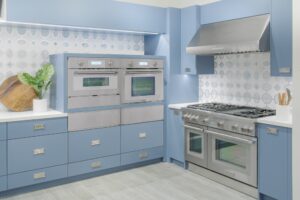

Hood Inserts vs Statement Range Hoods

Hood Inserts vs. Statement Range Hoods: Ventilation, Cabinetry, and Luxury Kitchen Design in 2026
Choosing the right range hood is one of the most important decisions when designing a luxury kitchen. A high-quality ventilation system does more than remove smoke and odors. It protects cabinetry, improves indoor air quality, and keeps your cooking space comfortable.
Today’s luxury kitchens generally follow one of two design directions. Some homeowners prefer a clean, seamless appearance with hidden appliances. Others want bold statement pieces that become the room’s centerpiece. That is why many people compare hood inserts vs. statement range hoods before starting a kitchen remodel. A hood insert hides inside custom cabinetry for a sleek, integrated appearance. A statement range hood is designed to stand out with premium materials, dramatic shapes, and eye-catching finishes.
Both options provide excellent air clearance when paired with the right luxury cooking appliances, but the installation and visual impact differ significantly. This guide explains the differences in ventilation performance, installation, cabinetry requirements, maintenance, and design so you can confidently choose the right solution.
What Is a Hood Insert?
A hood insert is also called a power pack. It is the engine of a kitchen ventilation system, which provides the power needed to extract air efficiently. Unlike a standard hood, an insert is not a finished product on the outside. It is a stainless steel box that contains the blowers, filters, and lights. It is designed specifically to be built into something else.
Most homeowners use hood inserts when they want a custom-built hood shell. This shell might be made of the same wood as the kitchen cabinets, or it could be covered in plaster, stone, or even custom metalwork. Because the insert sits up inside this housing, it is almost entirely hidden from view. When standing at the stove, only the bottom of the unit is visible.
This style is a favorite for those who love a “hidden” look. It allows the backsplash tile to go all the way up the wall without a large metal object breaking the pattern. It is also a smart choice for traditional kitchens where a large metal chimney might feel too modern. These units are essential components of luxury kitchen ventilation, providing powerful suction without overpowering the room’s design.
What Makes a Statement Range Hood Different?
A statement range hood is designed to be seen. It does not hide inside a cabinet. Instead, it sits proudly on the wall or hangs over a kitchen island. These hoods come in many styles, including chimney hoods, pro-style canopy hoods, and decorative island hoods.
The statement range hood is often treated like a piece of furniture. You might see them finished in matte black, brushed brass, or even hammered copper. They create a focal point. If the kitchen has a very large, high-end range, a statement hood helps balance the room’s scale. Without a large hood, a big professional range can sometimes look out of place.
These hoods are also practical for open-concept homes. A visible chimney helps define the cooking zone in a large, open space. While some people worry that a big hood will make a kitchen look smaller, the opposite is often true. A well-placed statement hood can make the ceiling feel higher by drawing the eye upward. It is a classic choice for anyone who wants their cooking appliances to be the star of the show.
Ventilation Performance: Capture Area, Blower, and Ducting
Performance is about more than just how fast a fan spins. It is about how well the hood catches smoke and grease before they spread through the house. This involves 3 main things: capture area, the blower, and the ducting path.
The capture area is the open space at the bottom of the hood. A deeper hood usually catches more steam because it has more room to hold the air before sucking it out. Statement hoods often have a larger built-in capture area. However, a custom range hood built around an insert can be designed with any capture area size the builder wants.
The blower is the motor. Some blowers live inside the hood, while others are moved to the attic or even the roof to reduce noise. When looking at a ducted range hood, the path the air takes is very important. Short, straight paths to the outside work best. If the duct has too many turns, the air slows down, and the kitchen might stay smoky even with a powerful fan.
Performance does not depend on whether the hood is hidden or visible. It depends on the specs. It is vital to check the manufacturer’s installation guides for the specific model. Always verify local building codes regarding “make-up air,” which is the fresh air brought back into the home to replace what the hood sucks out.
Cabinetry and Visual Integration
The way a hood interacts with the cabinets changes the whole feel of the kitchen. A cabinet insert hood is all about integration. It allows the upper cabinets to look like one continuous line. This is very popular in modern, minimalist designs where “less is more.” It also works well in kitchens with lower ceilings, as it prevents the space from feeling cluttered with too many different materials.
Statement hoods require more planning with the cabinetry. Designers have to decide whether the hood will be flanked by cabinets or sit on a blank wall. A popular 2026 look is the “freestanding” hood, with no upper cabinets near the stove at all. This creates a very airy, luxurious feeling.
One thing to think about is the sightline. If the stove is on a kitchen island, a statement hood will hang down from the ceiling. This can block the view into the living room. In that case, some people choose a very slim statement hood or a flush-mount insert that sits flat against the ceiling. Planning these details early is key to a successful remodel. You can see many examples of these styles by looking at range hoods at Universal Appliance and Kitchen Center.
Which Hood Style Fits Your Kitchen?
Every kitchen has a different “personality.” The right hood should match that vibe. Here are a few ways to decide:
- The Minimalist Kitchen: If you want smooth surfaces and hidden handles, go with a hood insert. It disappears into the design and lets the materials speak for themselves.
- The Professional Chef’s Kitchen: If you have a 48-inch or 60-inch range, a statement hood is almost a requirement. It matches the “pro” look of the heavy-duty burners and stainless steel.
- The Traditional or French Country Kitchen: An insert is often best in this style. It allows you to build a decorative wooden or plaster mantle that resembles an old-fashioned fireplace.
- The Modern Industrial Kitchen: A statement hood made of raw steel or with visible rivets adds to the rugged, cool feeling of an industrial space.
- The Small but Luxury Kitchen: An insert can help a small kitchen feel larger by keeping the wall lines clean and simple.
No matter which style is chosen, the goal is to create a space that feels balanced. If you are unsure, a design consultation can help. The experts at Universal Appliance and Kitchen Center can help you look at different finishes and sizes to see what fits your layout.
Comparison Table: Hood Insert vs. Statement Range Hood
| Decision Factor | Hood Insert | Statement Range Hood |
| Visual Look | Hidden/Integrated | Visible Focal Point |
| Cabinetry | Needs custom housing | Needs wall or island space |
| Design Style | Minimalist or Traditional | Modern or Industrial |
| Installation | More complex (needs a builder) | Simpler (attaches to wall/ceiling) |
| Material | Usually hidden stainless steel | Metal, Glass, or Custom Finish |
| Best Feature | Shows off custom woodwork | Adds “jewelry” to the kitchen |
FAQs about Statement Range Hood
Are hood inserts better than regular range hoods?
They are not necessarily “better” at moving air, but they are better for custom designs. If you want a hood that perfectly matches your cabinets, an insert is the way to go. If you want an easy, all-in-one solution, a regular statement hood is often easier to install.
Do statement range hoods work as well as built-in inserts?
Yes, both styles use the same types of motors and filters. The performance depends on the CFM (cubic feet per minute) rating and the quality of the ductwork, not on the hood’s exterior shape. You can find high-performance models in both categories.
How wide should a range hood be?
Most designers recommend that the hood be at least as wide as the cooktop. For even better performance, especially with professional ranges, it is common to make the hood 6 inches wider than the stove. This gives it a 3-inch overlap on each side to catch escaping steam.
Do luxury kitchens need ducted ventilation?
In a luxury setting, a ducted range hood is highly recommended. While ductless (recirculating) hoods exist, they do not remove heat or moisture from the room. A ducted system vents everything outside, which keeps the kitchen air cleaner and protects your high-end cabinetry from grease buildup.
Planning for 2026 and Beyond
As we look toward kitchen design in 2026, the focus is on personal expression. Some people want their kitchen to feel like a quiet sanctuary, while others want it to feel like a high-energy cooking lab. The ventilation you choose sets the tone for that entire experience.
When planning, remember that a range hood is a long-term investment. It protects your home’s air quality and keeps your expensive stone and wood surfaces clean. It is worth taking the time to read a range hood buying guide to understand features such as LED lighting, heat sensors, and quiet-speed settings. Brands like Wolf ventilation offer a wide range of options that prove you don’t have to sacrifice power for beauty.
If you are ready to see these appliances in person, visiting a showroom is the best next step. You can compare the size and scale of different hoods and see how they look next to various cooktops. Whether you are building a new home or just updating your current space, the right hood will make every meal more enjoyable.
Conclusion
The debate between hood inserts and statement range hoods isn’t about which one is better. It is about which one tells the right story for your home. An insert is the silent partner, working hard behind the scenes to let your cabinetry shine. A statement hood is the bold leader, defining the room’s style from the moment you walk in.
For help narrowing down your choices, reach out to the team at Universal Appliance and Kitchen Center. They can help you match the right ventilation format with your favorite finishes and kitchen workflow. Whether you want the sleek look of an integrated power pack or the grand presence of a custom metal chimney, the right choice is waiting to be discovered.
- Appliance Rebates in 2026: How to Compare Brand Promotions Without Buying the Wrong Package
- Luxury Appliance Packages in 2026: How to Match Your Refrigerator, Range, Dishwasher, and Ventilation
- Luxury Laundry Appliances for 2026 Remodels
- Wall-Mounted vs. Deck-Mounted Tub Fillers: Luxury Bathroom Fixture Planning in 2026
- Trash Compactors and Recycling Cabinets: Hidden Kitchen Cleanup Zones for Luxury Remodels in 2026
- Outdoor Hoods for Covered Patio Kitchens
- Column Freezers vs Upright Freezers
- Hood Inserts vs Statement Range Hoods
- Quiet Dishwashers for Open-Concept Luxury Kitchens: dBA Ratings, Drying Systems, and Panel-Ready Design in 2026
- Dual-Fuel vs. All-Gas Ranges: Which Cooking Performance Matches Your Style?