
Speed Oven vs Microwave Combo Choices: Upgrading Your Luxury Kitchen Appliance Layout
Designing a high-end kitchen is a balance of art and science. Every square inch of your cabinetry must serve a purpose. Today, the biggest debate among premium homeowners centers on secondary cooking nodes. Should you choose a sleek speed oven or a traditional microwave combo?
When comparing a speed oven vs microwave combo, a speed oven uses convection heat, broiling elements, and microwave technology. It can bake and roast food up to four times faster while maintaining gourmet quality results. A standard microwave combo includes a regular wall oven with a separate built-in convection microwave. This article explores what a speed oven is and how it helps homeowners save cabinet space without sacrificing cooking flexibility.
What Is a Speed Oven? The Technology Behind Fast Gourmet Cooking
To truly understand what a speed oven is, you must look past simple reheating settings toward advanced thermodynamic engineering. Instead of using a single heat source, these high-end units integrate high-intensity quartz or halogen broilers, a heavy-duty ring element with an internal convection fan, and precisely cycled microwave energy. By engaging these distinct cooking methods simultaneously, the appliance rapidly cooks the internal proteins of a dish while instantly searing, crisping, and browning the outer crust.
A speed oven is not just a “fast microwave.” It is a professional-grade convection oven that uses microwave energy as a supplemental tool rather than the primary driver. In a standard microwave, water molecules are vibrated to create heat. This often leaves food soggy or unevenly cooked. In a speed oven, the halogen bulbs provide intense, immediate radiant heat. The convection fan circulates that heat to ensure every corner of the cavity is at the same temperature.
While these elements work, the microwave component pulses at specific intervals. This “boost” ensures the center of your food reaches the safe internal temperature in a fraction of the time. According to the official Sub-Zero manufacturer’s technical guidelines, this combination yields results indistinguishable from those of a traditional thermal oven. You get the flaky crust of a tart and the juicy interior of a roast, all while saving 30 to 40 minutes of cooking time.
Furthermore, most luxury speed ovens feature a stainless steel or ceramic interior. These materials are chosen for their ability to reflect heat and withstand the high temperatures generated by the broiler. This is a far cry from the plastic-lined interiors of budget countertop microwaves.
Defining the Alternative: The Traditional Microwave Combo Configuration
A traditional built-in combination wall setup takes a completely separate architectural approach to modern kitchen utility. This layout physically stacks a heavy-duty, standard 30-inch thermal convection wall oven below a separate, dedicated built-in convection microwave unit. While this arrangement provides the classic flexibility of running two entirely independent cooking cavities simultaneously, it occupies twice the vertical space in custom floor-to-ceiling kitchen towers.
The microwave combo is the “workhorse” of the traditional American luxury kitchen. The bottom unit is usually a full-sized 5.0 cubic foot oven. It can handle a 25-pound turkey with ease. The top unit is typically a 1.6 to 2.1 cubic foot convection microwave. Unlike a speed oven, these two cavities do not share technology. The microwave is a microwave, and the oven is an oven. They are simply married together by a single piece of stainless steel trim and a unified control panel.
For many homeowners, this is the “safe” choice. It feels familiar. You have a place to pop popcorn and a place to bake cookies. However, it lacks the integrated synergy of a speed unit. You cannot “speed cook” in the bottom oven, and you cannot “truly roast” in the top microwave with the same power as a halogen-driven system. It is a configuration of volume over innovation.
Feature Comparisons: Speed Ovens vs. Convection Microwave Stacks
While a high-end convection microwave can bake basic dishes using circulating warm air, it lacks the raw browning power of a dedicated speed system’s high-wattage broiler elements. True speed systems operate with heavy-duty internal ceramic or stainless steel interiors built to withstand sustained commercial-grade roasting temperatures. This mechanical integrity ensures that a true hybrid model can roast a whole chicken or bake artisanal breads with the same crisp texture and structural finish as a traditional full-sized oven.
Preheating Efficiency
A speed oven is a master of speed, even before the food goes in. Because the cavity is smaller (typically 24 or 30 inches wide but shallower than a standard oven), it preheats in about five minutes. A traditional wall oven in a combo stack can take fifteen to twenty minutes to reach 400 degrees. If you are a busy professional, those fifteen minutes are the difference between a relaxing dinner and a rushed one.
Broiling and Searing
This is where the distinction becomes clear. If you put a steak in a convection microwave, it will likely be grey and tough. If you put it in a speed oven, the quartz infrared broilers mimic the heat of a charcoal grill. They lock in juices by searing the surface immediately. Standard microwave combos rely on thin heating elements that often lack the “throw” required for a restaurant-quality sear.
Internal Pan Constraints
Most traditional microwave combos use a turntable. This limits you to round dishes. Many speed ovens, especially those from brands like Wolf or Miele, use a stationary rectangular rack system. This allows you to use standard 9×13 baking pans or even small roasting sheets. It makes the speed oven feel more like a “real” oven in daily use.
Moisture Retention
Because speed ovens cook so quickly, there is less time for moisture to evaporate. In a traditional oven, long cooking times can dry out lean proteins like chicken breast or pork tenderloin. The targeted microwave bursts in a speed system finish the center so fast that the moisture stays trapped inside the muscle fibers.
Architectural Advantages: Optimizing Cabinet Space and Clean Design Lines
Incorporating these high-efficiency cooking nodes into an upcoming layout redesign yields significant spatial advantages. In a luxury home, “space” is the ultimate luxury. A cluttered kitchen feels hectic. A streamlined one feels serene.
- Cabinet Footprint Minimization: Selecting a single compact hybrid cavity frees up valuable under-counter base cabinetry or pantry space typically lost to secondary appliances. Instead of a massive 60-inch-tall double oven tower, you can install a single speed oven at eye level. This leaves room for a warming drawer or additional storage below.
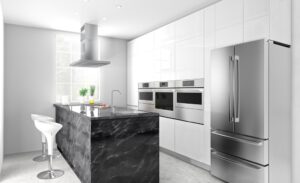
- Streamlined Horizontal Integration: Placing a 24-inch or 30-inch hybrid unit flush alongside a premium built-in steam oven creates a clean, symmetrical cooking station. This “horizontal stack” is a hallmark of modern European design. It prevents the “wall of stainless steel” look and makes the kitchen feel more like a living space.
- Versatile Installation Altitudes: Speed ovens are lightweight compared to full wall ovens. They can be installed under a counter, in a kitchen island, or even in a butler’s pantry. A microwave combo stack is almost always restricted to a tall cabinet because of the weight and size of the lower oven.
- Clean Minimalist Aesthetics: Many modern speed ovens feature “handleless” designs. They open with a touch of a button or a tap on the glass. This aligns perfectly with high gloss or matte finish custom cabinetry, where bulky handles might disrupt the visual flow.
By choosing a speed oven, you are effectively answering the question of what a speed oven is by defining it as a space-saving powerhouse. It lets you use a 48-inch pro range as your primary heat source and a speed oven as your secondary, eliminating the need for a bulky third wall oven.
Brand Deep Dives: Who Leads the Speed Oven Market?
When investing in luxury cooking appliances, brand heritage matters. Each manufacturer approaches the concept of “speed” differently.
Miele: The Master of Programs
Miele’s Speed Ovens are legendary for their “MasterChef” programs. You don’t need to know how much microwave energy to use. You simply select “Filet Mignon” and the thickness, and the oven calculates the halogen convection microwave ratio for you. Their interiors feature a “PerfectClean” linen weave finish that is incredibly resistant to scratches and stuck-on grease.
Wolf: The Professional’s Choice
Wolf focuses on raw power and iconic design. Their speed ovens often feature the signature red knobs or sleek black glass to match their ranges. Wolf’s technology is rooted in their commercial heritage. They use high-performance convection fans that ensure even browning regardless of where the food is placed in the cavity.
Thermador: The Entertainer’s Dream
Thermador offers speed ovens that integrate perfectly with their “Home Connect” ecosystem. You can preheat your oven from your phone while you are at the grocery store. Their units are known for having one of the largest internal capacities in the speed category, making them ideal for larger families who still want the speed of a hybrid system.
Monogram: The Statement Piece
Monogram’s Advantium technology is often cited as the gold standard for speed. It uses high-intensity halogen light from both above and below. This creates a “glow” that cooks food with incredible precision. It is widely considered one of the most versatile units on the market, functioning as a toaster, broiler, convection oven, and microwave all in one.
FAQs about What Is a Speed Oven
1. Can a speed oven completely replace a traditional microwave?
Yes, high-end speed units feature a dedicated “microwave only” setting that operates identically to a standard built-in model for quick reheating and defrosting. This dual capability makes it the best choice for a secondary appliance. This allows you to completely eliminate a separate countertop unit from your layout.
2. Do speed ovens require special electrical wiring?
Most high-performance speed ovens require a 240V connection to power the halogen bulbs and convection elements simultaneously. This is different from a standard 120V microwave. You should consult with your contractor early in the renovation to ensure your kitchen’s electrical panel can handle the load.
3. Can I use metal pans in a speed oven?
This depends entirely on the mode you are using. In “Speed” or “Microwave” modes, metal is generally prohibited because of the microwave energy. However, in “Convection only” or “Broil only” modes, you can use traditional metal bakeware just like a standard oven.
4. Is the interior of a speed oven hard to clean?
Luxury models often feature stainless steel interiors or specialized “EasyClean” enamel. Because these ovens use convection fans, grease can sometimes circulate. However, many brands now offer a steam clean cycle. This makes it very simple to wipe away residue after a high-speed roast.
5. Which is better for a large family that entertains?
The traditional microwave combo is often better for high-volume needs. Having two separate oven cavities allows you to bake a dessert in the bottom while roasting a side dish in the top. If you frequently host holiday dinners, the extra capacity of a combo stack is indispensable.
Selecting Your Ultimate Luxury Cooking Hub Platform
Choosing your secondary cooking anchor ultimately depends on your daily entertainment volume and lifestyle patterns. If you regularly host large family gatherings and require multiple independent baking cavities to prep side dishes and roasts concurrently, a traditional dual cavity combo stack is a reliable option. The volume of a full-sized second oven is hard to beat when you have 30 guests for dinner.
However, if your design embraces minimalist aesthetics, demands exceptional speed for weeknight meals, and values highly precise multi-functional tech, an integrated speed system is the ultimate upgrade. For most modern families, the “second full oven” often sits empty 360 days a year. A speed oven, by contrast, handles everyday cooking tasks from making morning toast and reheating coffee to preparing gourmet salmon dinners in just fifteen minutes.
When you look at the total cost of ownership, a speed oven often provides more “value per use” than a microwave combo. It reduces the stress of meal prep and opens up new architectural possibilities for your kitchen island or pantry. It represents the pinnacle of modern appliance evolution.
Explore the Finest Built-In Luxury Appliances at Universal Appliance and Kitchen Center
Reviewing these advanced cooking systems in person makes it simple to configure your modern kitchen renovation. Our expansive showroom environments feature fully interactive displays from the world’s most prestigious luxury appliance brands. You can see the difference between a Miele Speed Oven and a Wolf Microwave Combo in real time. Our experts can explain the nuances of Thermador and Monogram technologies. Visit a local Southern California Universal Appliance and Kitchen Center showroom today to consult with our product experts and choose the perfect combination of cooking elements for your home. Your dream kitchen layout is just one visit away.
- Luxury Laundry Appliances for 2026 Remodels
- Wall-Mounted vs. Deck-Mounted Tub Fillers: Luxury Bathroom Fixture Planning in 2026
- Trash Compactors and Recycling Cabinets: Hidden Kitchen Cleanup Zones for Luxury Remodels in 2026
- Outdoor Hoods for Covered Patio Kitchens
- Column Freezers vs Upright Freezers
- Hood Inserts vs Statement Range Hoods
- Quiet Dishwashers for Open-Concept Luxury Kitchens: dBA Ratings, Drying Systems, and Panel-Ready Design in 2026
- Dual-Fuel vs. All-Gas Ranges: Which Cooking Performance Matches Your Style?
- Reimagining the Kitchen Layout: The Ultimate Guide to Column Refrigeration
- What Is a Speed Oven? Why This Hybrid Appliance Redefines Luxury Kitchen Architecture