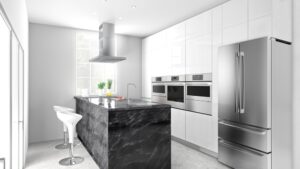
Professional Style Ventilation: How to Calculate CFM and Choose the Right Range Hood Layout
When evaluating luxury cooking appliances, installing professional-style ventilation is typically dictated by total cooktop BTU outputs, kitchen spatial volume, and strict local building codes. Inadequate capture zones can result in grease, heat, and moisture damage to surrounding custom cabinetry. Modern kitchen design focuses heavily on aesthetics. However, the mechanical integrity of the home depends on air quality. High-performance ranges produce significant thermal energy. Without a calibrated extraction system, this energy lingers. It coats surfaces in a fine mist of vaporized grease. It triggers smoke alarms. Over time, it can even degrade the structural finish of your premium wood surfaces. Choosing the right system requires more than picking a pretty canopy. It requires a deep dive into the physics of airflow. This guide will walk you through the precise calculations needed for a high-performing culinary environment. The Physics of Capture: Why CFM Calculations Matter Cubic Feet per Minute (CFM) measures the volume of air a fan moves in sixty seconds. In a kitchen, this measurement determines how quickly your hood can exhaust contaminated air. High-performance cooking creates a "thermal plume." This is a rising column of hot air, smoke, and vaporized oils. To effectively calculate range hood CFM, you must understand the speed of this plume. If the fan is too weak, it cannot capture the smoke and cooking fumes. They spread into your living room or dining area. Professional-style ventilation serves as a structural safety system. It is designed to eliminate high-temperature cooking byproducts before they disperse. High-output range hoods