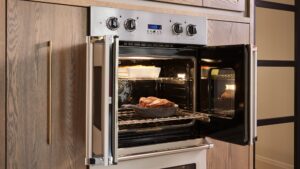
French Door Wall Oven vs. Drop Down Oven: Elevating Your Luxury Kitchen Layout
Choosing the right appliances is the most critical step in a high-end kitchen renovation. The oven serves as the heart of your culinary workspace. Today, the debate often centers on the door mechanism. Specifically, homeowners must choose between a French door wall oven and a traditional drop-down model. When comparing a French door wall oven vs a traditional drop-down oven, a French door wall oven features side-swinging doors that open from the center for superior ergonomic access and safety, whereas a drop-down oven uses a classic downward-opening door that requires leaning forward over a hot surface. Selecting the optimal configuration for a culinary workspace depends heavily on your physical comfort, baking style, and surrounding traffic patterns. This guide explores these two configurations in depth. We will examine ergonomics, aesthetics, and spatial requirements to help you design a world-class kitchen. The Ergonomic Shift: Why French Door Wall Ovens Are Trending The rise of the French door wall oven in residential design marks a significant ergonomic shift. For decades, home bakers struggled with heavy, downward hinged doors. These traditional doors create a physical barrier between the chef and the oven cavity. Eliminating the "Reach Over" Strain Traditional downward hinged cooking appliances present a distinct spatial hurdle during high-volume baking. Reaching over an extended, scorching surface to lift a heavy roasting pan strains the lower back and increases the risk of accidental burns. You must lean your torso forward while holding a significant amount of weight. This posture is inefficient and potentially dangerous.